Creative Art Ideas We re Broken Hearts That Start to Beat Again
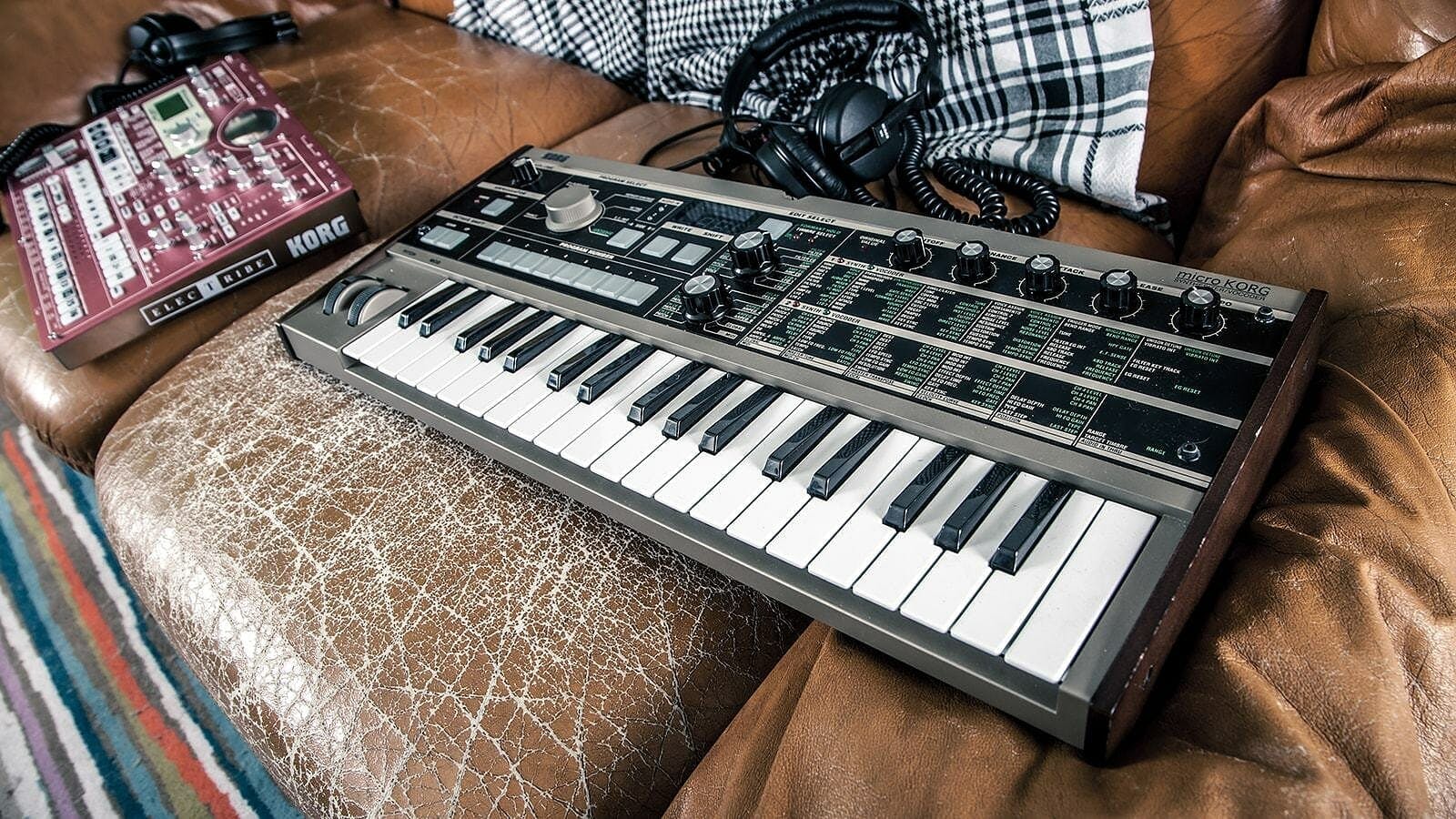
Running into a creative block is inevitable as a artistic. Making music demands passion and persistence, since the modern fashion of producing music is constantly changing, simultaneously full of pitfalls, and infinite opportunities.
Betwixt endless tweaks, scrapping unabridged projects, and feeling defeated, falling into a creative block is merely office of the natural creative process.
The life of a musician is never smooth sailing — and there will be times when the artistic chaos can leave you feeling dejected — just the writers from Get That Pro Sound are here to make things easier.
It's not so much about avoiding moments of creative drought, but knowing how to navigate and respond to these difficulties when they arise. Using the correct tools and working with expert people are fundamental, simply what separates successful musicians from the masses is the will to keep at it.
Working harder and longer is not the reply. Efficiency and creativity don't come from the same parts of the encephalon. Instead, nosotros'll have to acquire some tricks to loosen up our approach to heighten the creative procedure.
i. Prioritize fun time
Instead of setting yourself upwardly for some other day of "piece of work," change the footstep and prepare bated some studio fourth dimension to "play" without objectives or goals. Explore your tools, try out crazy techniques, and bank check out processing chains that yous'd never normally consider in your business concern-oriented, got-to-get-this-washed mindset.
In turn, this practice will set off a chain reaction and free up space in your brain to respond to new stimuli and fresh ideas. You'll likely come upwards with a few nuggets of inspiration to provide a starting point for hereafter tracks and production in ways yous never before imagined.
In Zen Buddhism, costless time allows you access your "beginner's mind" — the state when everything is new, fresh, and exciting. This is when you drib all preconceptions.
Make music a novelty once more: Yous'll get past a creative cake earlier you can count the eighth note.

2. Step away from feeling stuck
It's exhausting to piece of work at getting things done when you feel unmotivated. Information technology seems counterintuitive to stride abroad and do something else, merely that may be exactly what is needed.
How to deal with creative blocks: Simply going for a walk has been the default creative block-breaker for centuries. Writers, artists and musicians have long known the ability of the meditative, trance-like land that occurs when y'all hitting the path, sidewalk, or pavement.
Whether you are going on a run or partaking in some archetype #NetflixandChill, get out of the studio and gain some perspective. Rediscover your excitement and curiosity almost other aspects of the globe. You'll naturally refill your inspiration tank and go those creative juices flowing.
If yous don't feel similar creating something directly in the studio, at to the lowest degree create some space for your mind and get moving. Allow your subconscious to start stewing upward a fresh batch of succulent new ideas and new perspectives.
iii. Feel the fright and practise things differently
Fear is the antithesis to creativity. Nosotros often look to by experiences in order to dictate how we move frontwards, but this can be a dangerous path if you don't have the correct approach.
Cocky-uncertainty tin validate your fears and habitual thinking sabotages your creative impulses (which are unconventional past nature).
If madness is "doing the aforementioned affair and expecting a different result," it'south time to accept a closer look at your workflow when creating a piece of music — specially in the early stages.
Is at that place anything that you lot do the aforementioned way every single fourth dimension?
Find two or 3 things yous repeatedly practice and forbid yourself from doing them, at least for a while. In fact, if there's an exact opposite approach to your habitual beliefs, try that and see if it helps you overcome a creative block.
Experiment with how can you introduce some spontaneity into your process.
There's a long history of artists jolting themselves out of their habitual creative processes to proceed moving forward and explore more than of their creative potential. In 1967, when The Beatles felt boxed in by the incredibly famous identity they'd created, they reinvented themselves as a new group: Sgt. Pepper's Lonely Hearts Club Band.
David Bowie and Bob Dylan are besides masters of reinvention and alter-egos, both personally and musically. Even Beyoncé got in on the act when she created her Sasha Violent change-ego to tap into a particular aspect of her creativity. Sonny Moore (former singer of post-punk band From First To Last) seemed to hit his full artistic potential when he switched genres and became Skrillex.
We aren't necessarily telling you to you break out capes and facepaint to become your own version of Ziggy Stardust, simply experiment with how can yous introduce some spontaneity into your process.
If you're a metallic-head, make an electronic pop track. If y'all only listen to drum and bass (or vanquish-heavy genres), try your hand at an ambience slice. Give new color to your phonation and y'all can work your style out of — or around — any creative block.
4. Split up the creative and editing processes
With computer-based music-making, it's far too easy to blur the 2 distinct parts of the creative process. While space "undo" and tweakable options are amazing, they can also atomic number 82 us into the trap of self-editing, criticizing, and undermining our ain ideas. Information technology'south important to get over the idea that all your productions will be masterpieces (or even successes). Relax.
Get comfortable cranking out ideas at a quicker rate, assuasive the creative process to unfold naturally at its pace. Later, with a different perspective, apply your critical scalpel to edit and improve these ideas.
5. How to be creative: forget almost it
What exercise you do when y'all've been working on a projection for too long, and you lot don't feel you can bit it or first something else while information technology's glaring at you from your project folder? In the earth of novelists and fiction writing, "putting information technology in a drawer" is a well-known term for setting aside a project (e.g. out of sight and out of mind), mayhap for months at a time.
It took Queen vocalist Freddie Mercury seven years to complete writing "Bohemian Rhapsody." He kept putting it abroad and then coming back to it.
If the work is still on your mind further down the route, you'll know that information technology'southward worth working on some more. Yous'll likewise take the ability to see it in a fresh light.
While it tin be painful to bury a project, yous may notice that when you don't think about it, you've freed up your attention to develop newer, better ideas.
half dozen. Have less time, not more
Although we clearly accept to make fourth dimension and expend some energy to get anywhere, this isn't really the whole story of how the creative process (and our minds) piece of work.
Oftentimes, we fall into the trap of thinking that we demand to keep sitting at our studio desk-bound to overcome the creative obstacles. This makes it feel even more than like a job that must exist ticked off a to-do list.
Once more, the best solution is the most counterintuitive.
Purposefully limit the amount of time you allow yourself to spend on whatever product aspect. Treat information technology similar a game: "Okay, I've got exactly 10 minutes to create this drum pattern."
It'southward surprising how a fourth dimension limit short-circuits our critical brains. Rather than agonizing over the details, go your tracks recorded. You can e'er become back afterward if it needs tidying up. Generally, information technology won't need that much polishing.
Remember that rawness and a sense of spontaneous creation can be one of the most appealing things about well-crafted music.
An interesting thing happens when nosotros accept deadlines: Somehow, we terminate what needs to exist done (and no more), resulting in stripped-down, vital productions with a sense of urgency and life.
As an case, when the Velvet Hush-hush'due south carefully positioned debut album failed to brand an impact on the The states charts (and was so further hampered by legal complications), they went dorsum into the studio. Frustrated and energized, the ring recorded the classic "White Light/White Oestrus" in but two days. They recorded the 17-infinitesimal "Sister Ray" in 1 take, accepting any "mistakes" they made as role of the runway.
In 1965, Bob Dylan took just three days to record Bringing It All Back Domicile. Interestingly, the only takes they used on the album were from the final two days. The album went on to sell over a 1000000 copies.
When the Beatles went to tape their debut anthology in 1963 with producer George Martin, they essentially performed their live set into two microphones at Abbey Route. In just 13 hours, the band recorded x tracks.
seven. Use fewer tools, not more
Distraction comes in many forms. If your creative piece of work is desk, the opportunity for only jumping online when yous get frustrated, checking in with social media, or watching videos of cats, can be overwhelming.
Only a more insidious form of distraction tin come from the very identify we're trying to focus on: our studio equipment. DAWs, plugins, MIDI controllers, synths and apps are great — until they crusade option overload and yous're paralyzed by the infinite possibilities. More equipment is not necessarily better in order to get out of a artistic cake.
See if y'all can brand a consummate track using a single VST synth without additional FX, plugins, samples, or processing (except what'southward bachelor on your chosen synth). Reduce your creative options and you'll be surprised how much more focused and productive y'all tin can be.
8. Change your environment
When creatively stuck, bands and artists regularly decamp to new locations to write or record. Although nosotros all tin't flit off to the legendary Hansa Studios or Muscle Shoals at the drop of a chapeau, the principle of switching environments still applies to abode and bedroom producers.
How to become more than creative: Get out of your familiar environment. With today's engineering, it's never been easier to pull a Damon Albarn and make an anthology on your iPad. You might likewise notice that your music comes out differently when you're on headphones in a public place, or exterior in the middle of nowhere. You lot tin can always take your location sketches back to agonize over them in the condolement of your studio afterwards.
Don't forget that the journey can be the most inspiring thing about going somewhere dissimilar. Some of the all-time recorded music has been created around the idea of travel, of transitioning to new places and new realms of idea.
9. Frame your project with a theme
Music producer block often occurs when yous're unsure of what you're trying to attain. 1 way around this is to requite yourself a very specific focal point or idea around which to orient your work. This manner, yous won't spend ages debating whether something works or not.
When producing music, a framing automatically gives you lot a specific context for your work, freeing y'all from the bottomless pit of endless options.
Before you beginning worrying about having to create a '70s-style prog-rock concept album, remember that your thematic gum tin be every bit clear or abstruse equally you desire it to be.
Requite yourself a very specific focal signal or idea effectually which to orient your work.
For case, Metallica has based some of their best songs on famous horror and classic literature. "For Whom The Bong Tolls" was directly inspired by Ernest Hemingway's 1940 novel of the aforementioned proper noun, and "Call of Ktulu" refers to the unfathomable, god-similar monster that originated in the story The Call Of Cthulhu by horror master extraordinaire, H.P. Lovecraft.
Jon Hopkins' 2013 anthology Amnesty opens with the sound of him opening the door, stepping off the street, and into his studio. It then develops by following the energetically pulsing ebb and flow journeying of a great night out.
Why not effort writing an alternating soundtrack to one of your favorite movies — or at least your favorite scene? This gives you a concrete framework from which to refer, with a specific showtime, finish, and dramatic beats in-betwixt. Or give yourself a themed challenge: "I'm going to write 1 track a day, every mean solar day this week, no matter what."
ten. Be more creative by raising the stakes
In that location's nothing similar public pressure to motivate you to get things done. If you commit to a project where the consequences are greater than your ain personal creative satisfaction (e.m. where you run the risk of letting other people downward), you'll be tapping into another powerful source of inspiration.
Tell friends, relatives, or your social media post-obit that you'll have a new release available by a given engagement. Give your goal but enough hype where you'd be embarrassed if you didn't follow through and deliver on your promise. It'southward a simple psychological fob, and it often works.
11. Music theory for figurer musicians: learn information technology!
For some self-taught producers, this might sound similar replacing frustrating piece of work with similarly frustrating piece of work, but taking some fourth dimension away from writing and producing to actually acquire a bit of music theory can be cracking to learn how to get past creative blocks.
Studying music theory like chord structures, arrangements, and how to build melodies and harmonies in a directed mode will nicely prepare you for the next time inspiration strikes.
12. Learn some new techniques
If you're feeling frustrated and uninspired with your music-making endeavors, it's probably because you struggle with transferring and shaping your ideas by the time they go to the computer. Why non take some fourth dimension away from trying to realize your ultimate vision to learn some core aspects of your chosen craft?
For example, focus exclusively on compression until you can choose how and when to utilise compression like a true pro.
Get dorsum to nuts and fundamentals: You'll experience like you're making progress once more. This will build your confidence dorsum up, which in turn will permit you to relax and allow your inventiveness smooth through once more.
thirteen. Make a regular appointment
No, not with a psychiatrist just yet. This involves setting strict, scheduled limits on your studio time. Fix a schedule for yourself. It doesn't need to be a time-consuming commitment. As we've just mentioned, the shorter the fourth dimension limit, the more than efficient you'll be. What's most important is your consistency.
Some other famous quote amongst novelists is, "The art of writing is the art of applying the seat of the pants to the seat of the chair." The same thought applies to musicians.
Frequently, cutting through procrastination and the deed of showing upwardly consistently (especially for a short time), tin can exist just what your creativity was asking for.
14. Benefits of collaboration
One of the greatest things nigh music is its collaborative nature. And when your inspiration is drying upward, about nothing is better than bringing other people into the mix.
Electronic music, in detail, can exist a very alone activity. While that's the very reason that some people are drawn to it ("Total freedom to do any I desire!"), this can besides become a massive obstacle when yous don't have anyone else to bounciness ideas off (or critique/edit your work).
If you find your brain is stagnating, simply get another person into the artistic equation. It'southward also quite likely that collaboration volition mean a change of scenery too, if you lot go to another musician'due south studio or rehearsal space, you'll kill two birds with i stone!
Many music careers have been kickstarted, reinvigorated, or spun into an entirely new management every bit a result of a particular collaboration. Think Aerosmith and Run-DMC, Dr. Dre and Eminem, MF Doom and Madlib, or Brian Eno and pretty much everyone — at some point or another.
In 2013, Arcade Fire teamed upwardly with LCD Soundsystem's head honcho, James Potato, on production duties to bring a different perspective to their audio on Reflektor.
Incidentally, the album was initially inspired by a trip to Republic of haiti, the abode country of ring member Régine Chassagne. And, it features a cameo vocal collaboration from none other than David Bowie on the album's title track. Bowie happened to pop by while they were mixing in New York, and after he jokingly threatened to steal the song for himself, they got him to jump in on their own version instead.
Offer to remix someone else's track, do a remix exchange with a swain producer, or for your adjacent session, bring in a friend as a session player. A vocalist, guitar player, bongo player… whoever who can change the wavelength of a session and burn down your inventiveness in new directions. Mix information technology up.
Don't be likewise precious
Information technology'south easy to get so obsessed with perfecting your art that it becomes a chore, rather than what it truly can be: A chance for free expression, to brand an authentic connexion with your listeners, and have pure fun.
Above all, nosotros hope the points and the actions detailed provide some encouragement the next time you hit a creative block. For more tips, check out this guide on how to generate songwriting ideas.
johnsonalonds1965.blogspot.com
Source: https://output.com/blog/14-ways-to-beat-creative-block
0 Response to "Creative Art Ideas We re Broken Hearts That Start to Beat Again"
Post a Comment